Dye! And how to use it wrong but well.
Dye is a broad topic with many different chemical forms and uses, but for this article I’d like to focus on Fibre Reactive Dye. It’s the most common stuff, good for dyeing cellulose fibers like a cotton and is the type included in your typical tie dye kit.
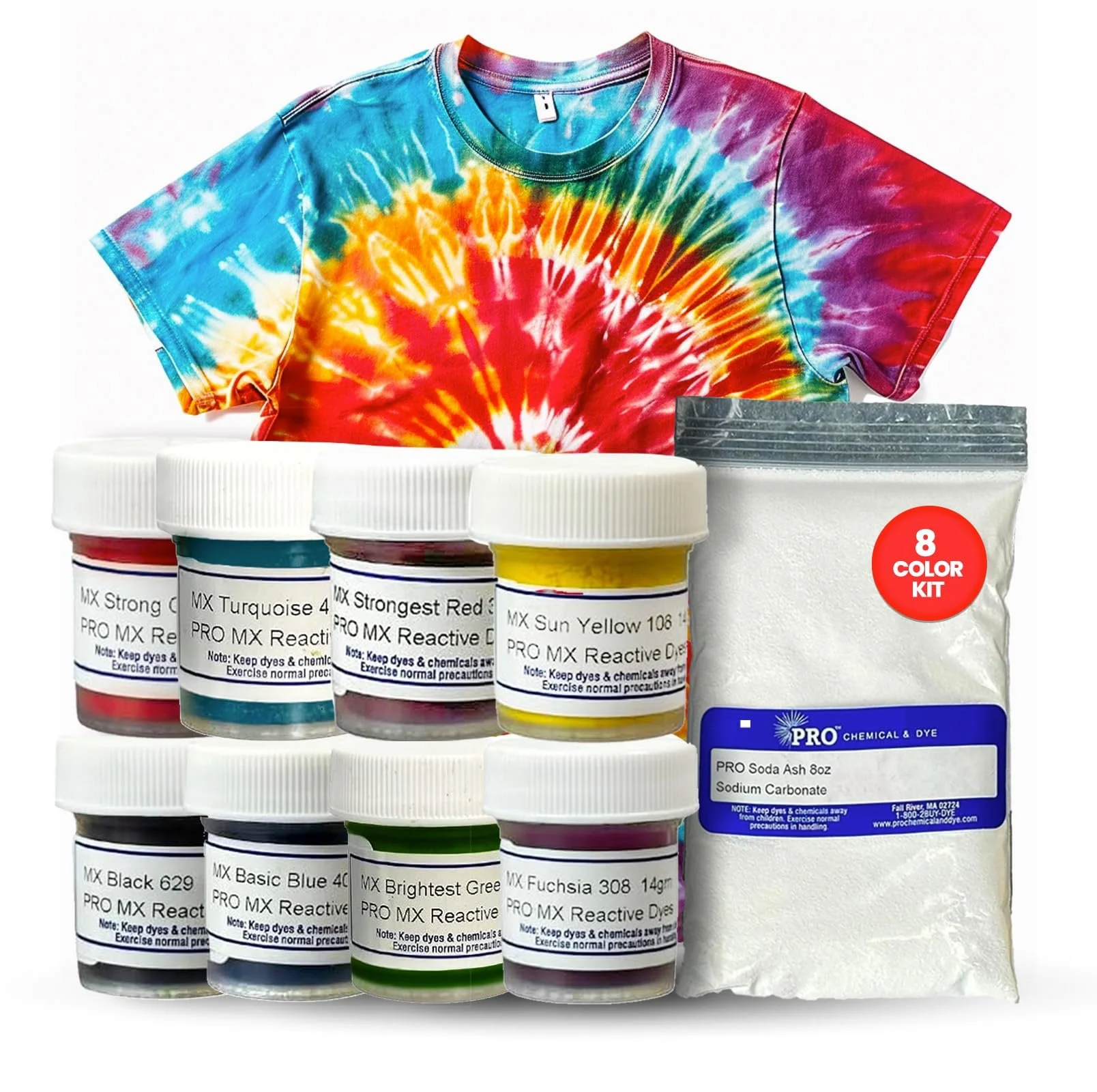
Dye and paint are not the same. Paint is made from pigment, which is an insoluble powder. That powder is dispersed in to a binder that allows it to adhere to a surface. Without the binder (like acrylic or oil) the pigment may stain a surface, but will wipe off easily wet or dry. Pigment can settle and separate and often needs to be stirred back into a paint solution. Fibre reactive dye is made of water soluble crystals that dissolve entirely. If you rub dye crystals on a surface, nothing will happen, but mix them into water and they are highly staining. When used properly, fibre reactive dye is fixed into fabric with a mordent like soda ash so they can withstand washing. Without the soda ash, they are infinitely rewettable, but resist rubbing off dry. They don’t stay put in your typical binder and will bleed up through paint and continue to wash off when wet. In the paint shop, dye is almost never used “correctly” but can be an invaluable tool in your belt.
Backdrops:
Dyeing a backdrop rather than using paint can avoid issues like wrinkles and cracking and will have a much softer feel, especially when sized with something like Methylcellulose. Corn starch will work as well, but it’s a bit less flexible and may crack a little if stretched too much. DON’T SIZE A DYED DROP WITH ANIMAL GLUE OR ACYRLIC, the dye won’t soak into those and will wash out/rub off easier.
Fibre reactive dye has the benefit of being more affordable than paint and is typically more vibrant as well. It’s also perfectly translucent, which makes it perfect for translucent drops (though you’ll need paint to black out anything that’s meant to be opaque).
A dyed drop should not be backsprayed to remove wrinkles because the dye isn’t set properly. If the water soaks through to the front, the color may run. Ideally the fabric is sealed well with the size, but it’s best not to tempt fate. If there are persistent wrinkles after being hung with a pipe, then a clothing steamer can get the job done with less moisture.
Dyeing a drop is more intimidating than painting because there’s less freedom to make mistakes. You can lighten areas with paint if you’ve gone too dark, but know that dye will always “ghost up”, so errors cannot be erased so easily. It’s also not very effective to dye over paint.
This 960 square foot backdrop was sized with methylcellulose and dyed so it could be stored over long periods and folded repeatedly without fear of paint flaking or wrinkling. The bulk of the work was done with an HVLP sprayer gun. This drop is about 90% dye and 10% white paint
Stained glass
Fibre reactive dye is a great colorant for stained glass as an alternative to the much costlier alcohol ink. While some people will use supersaturated rosco scenic paint, I find that it is still too opaque and is more expensive than dye.
Dye will settle nicely onto muslin and can be mixed with a thickener like methylcellulose to “float” the dye and marble/texture it before it settles too much into the fabric. Muslin stained glass is ideal for light boxes or opalescent glass. Clear acrylic gloss can be used to add sheen to the “glass” after it’s done.
While dye does not sit permanently in most acrylic binders, it will stay put in rosco’s CrystalGel. If your stained glass wants to be properly translucent, using a roller to apply tinted CrystalGel to clear plastic can give a lovely subtle rippled texture. Build up layers of color rather than pre mixing one color for the glass for more depth and personality.
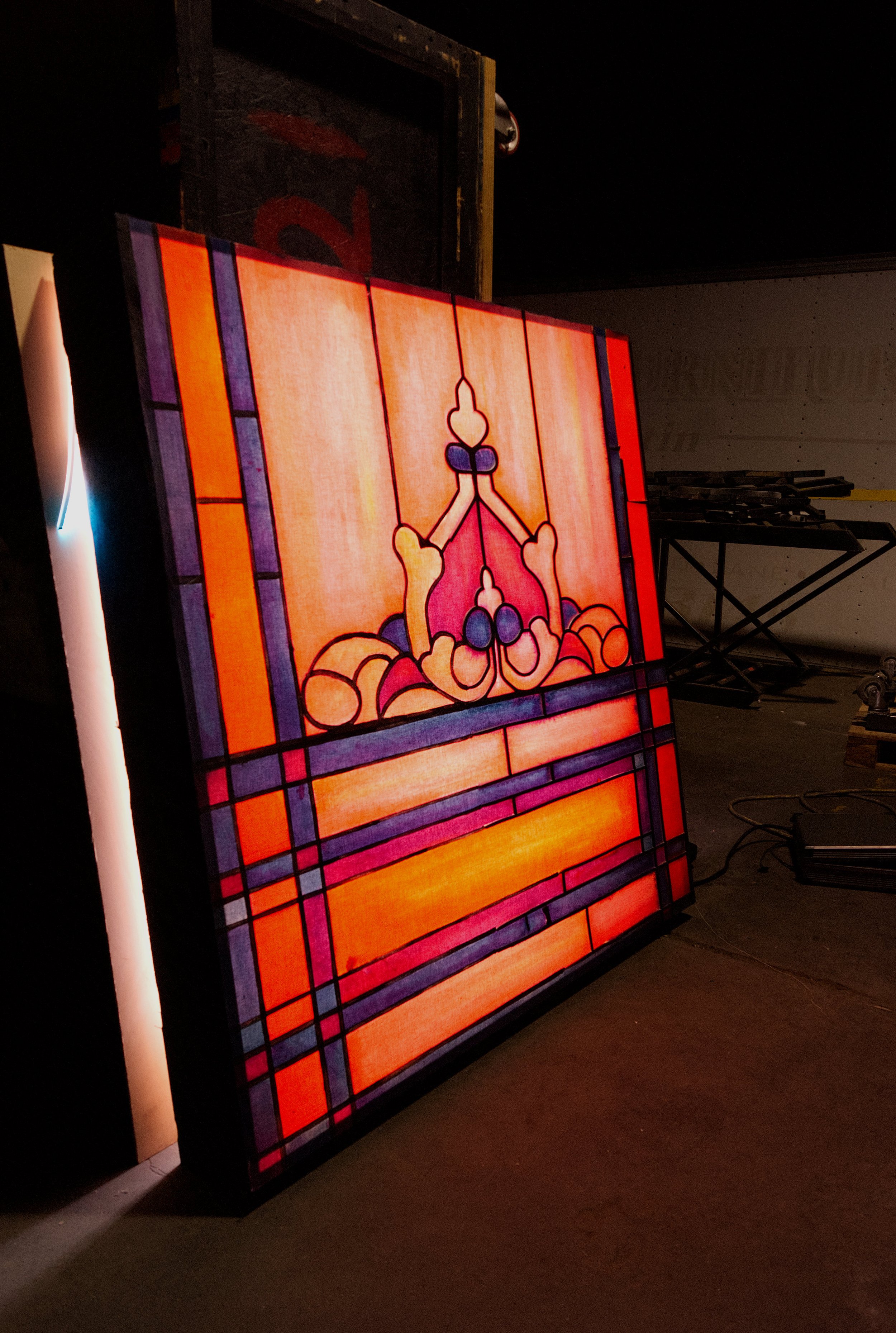
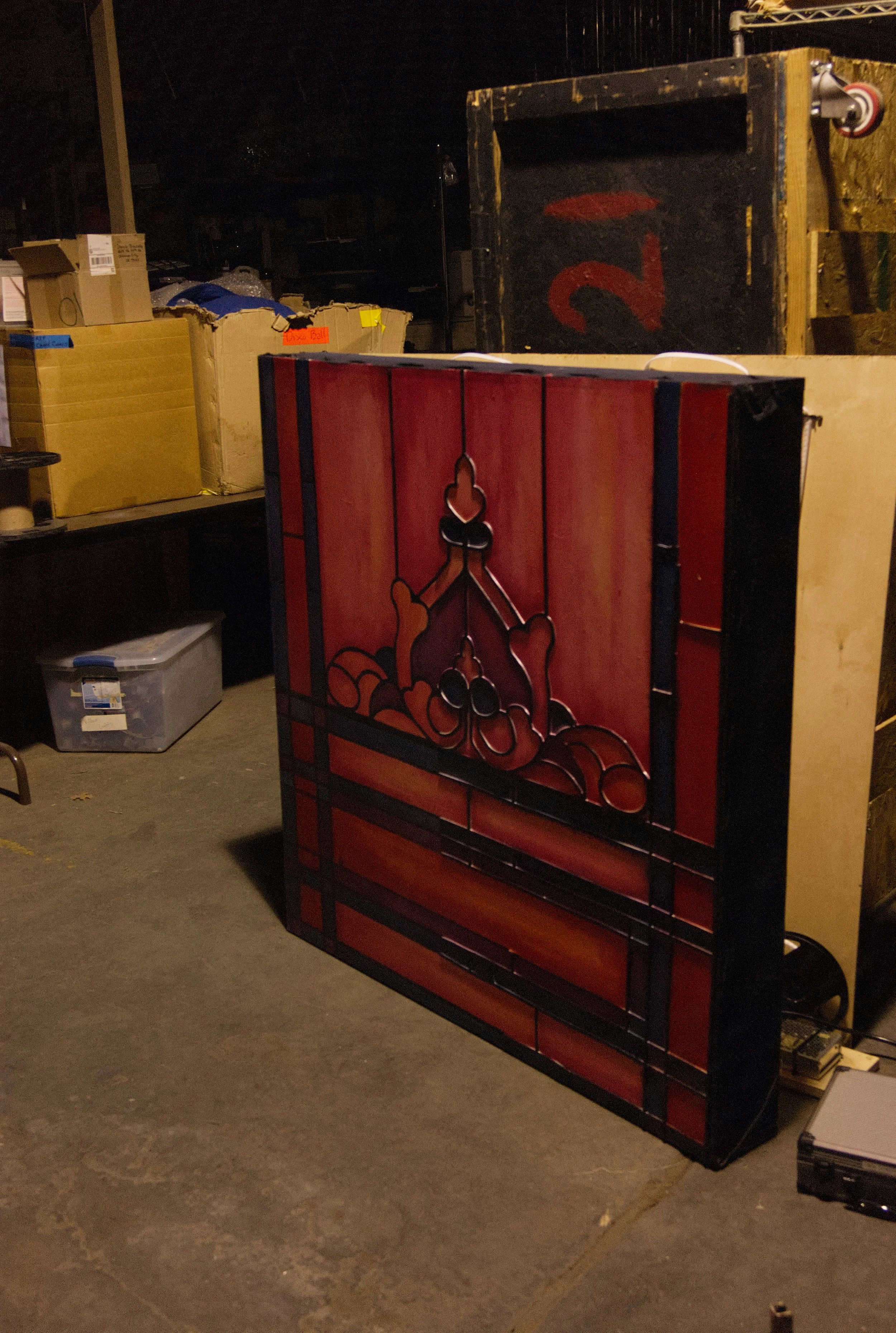
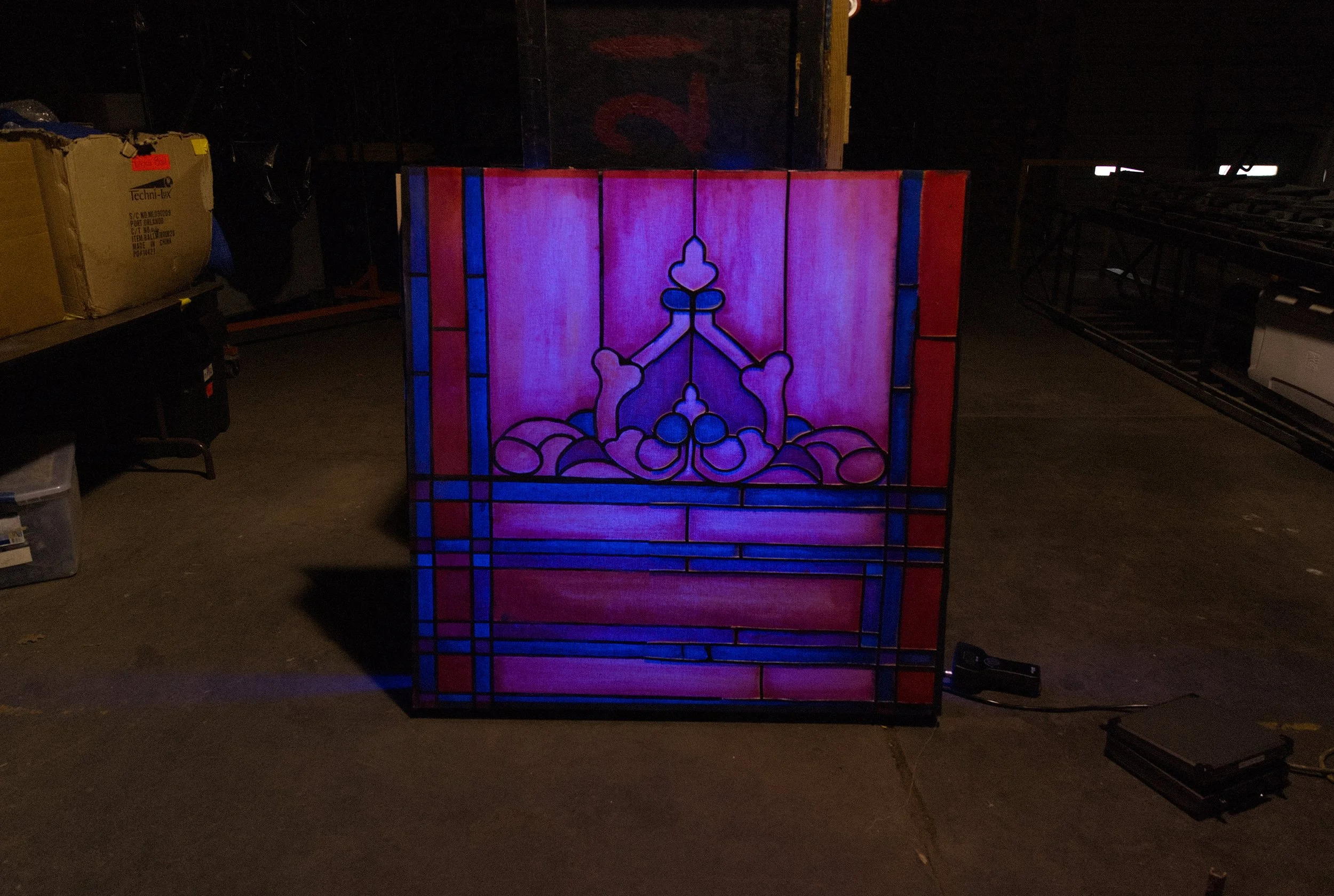
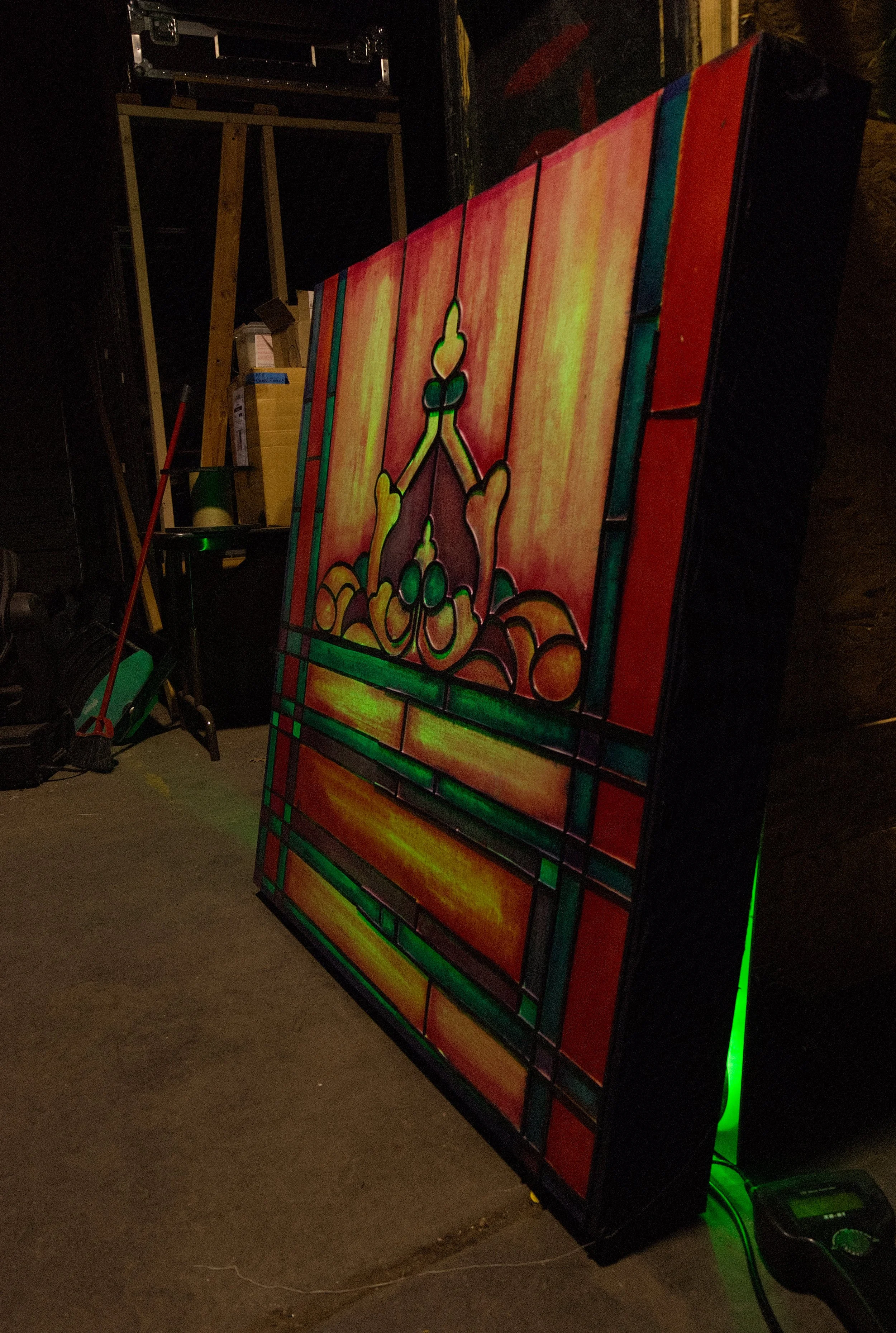
This was a sample light box. One side’s leading was painted on while the other had applied foam. The lights from left to right were white, off, blue and green.
Distressing
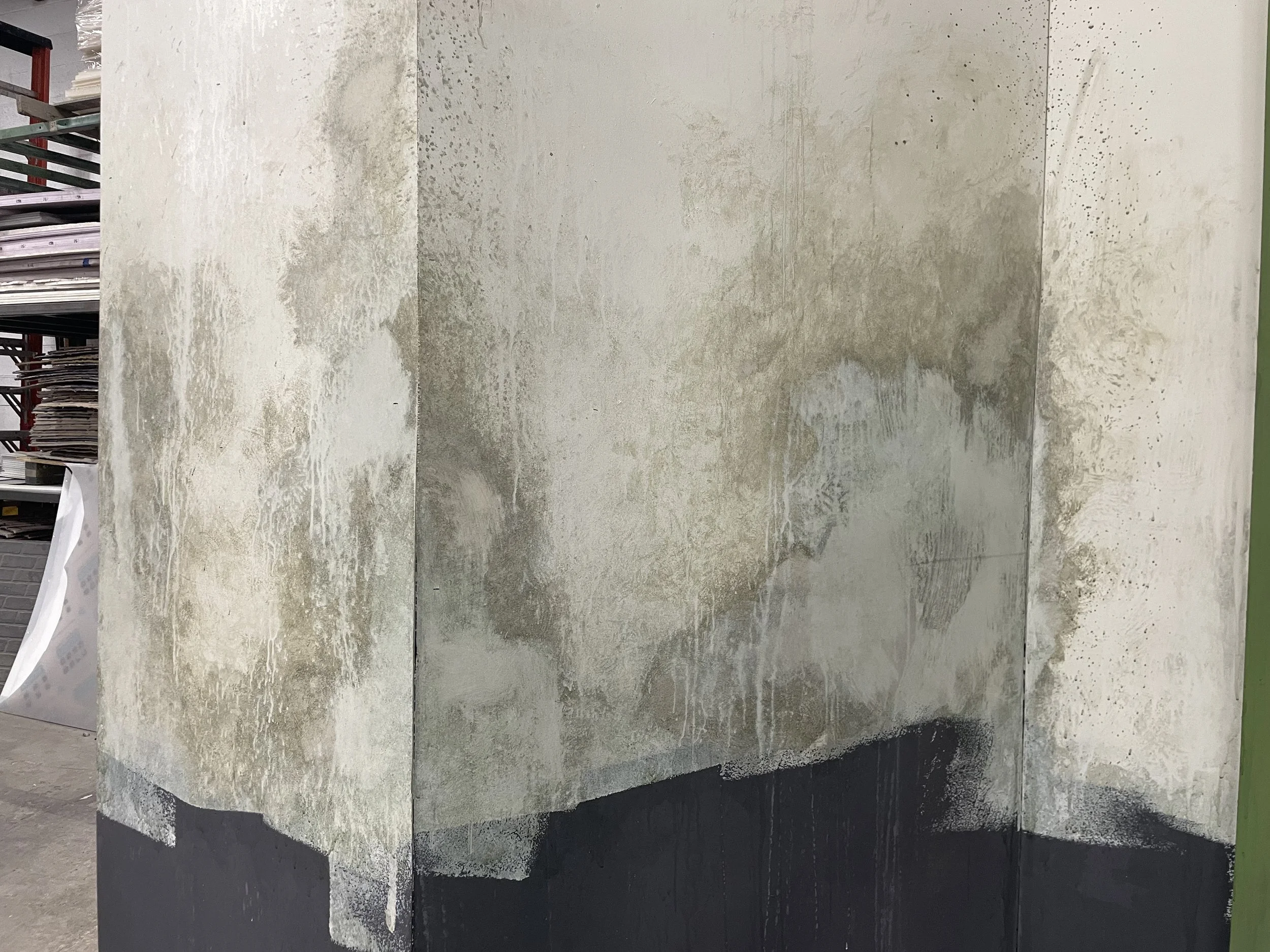
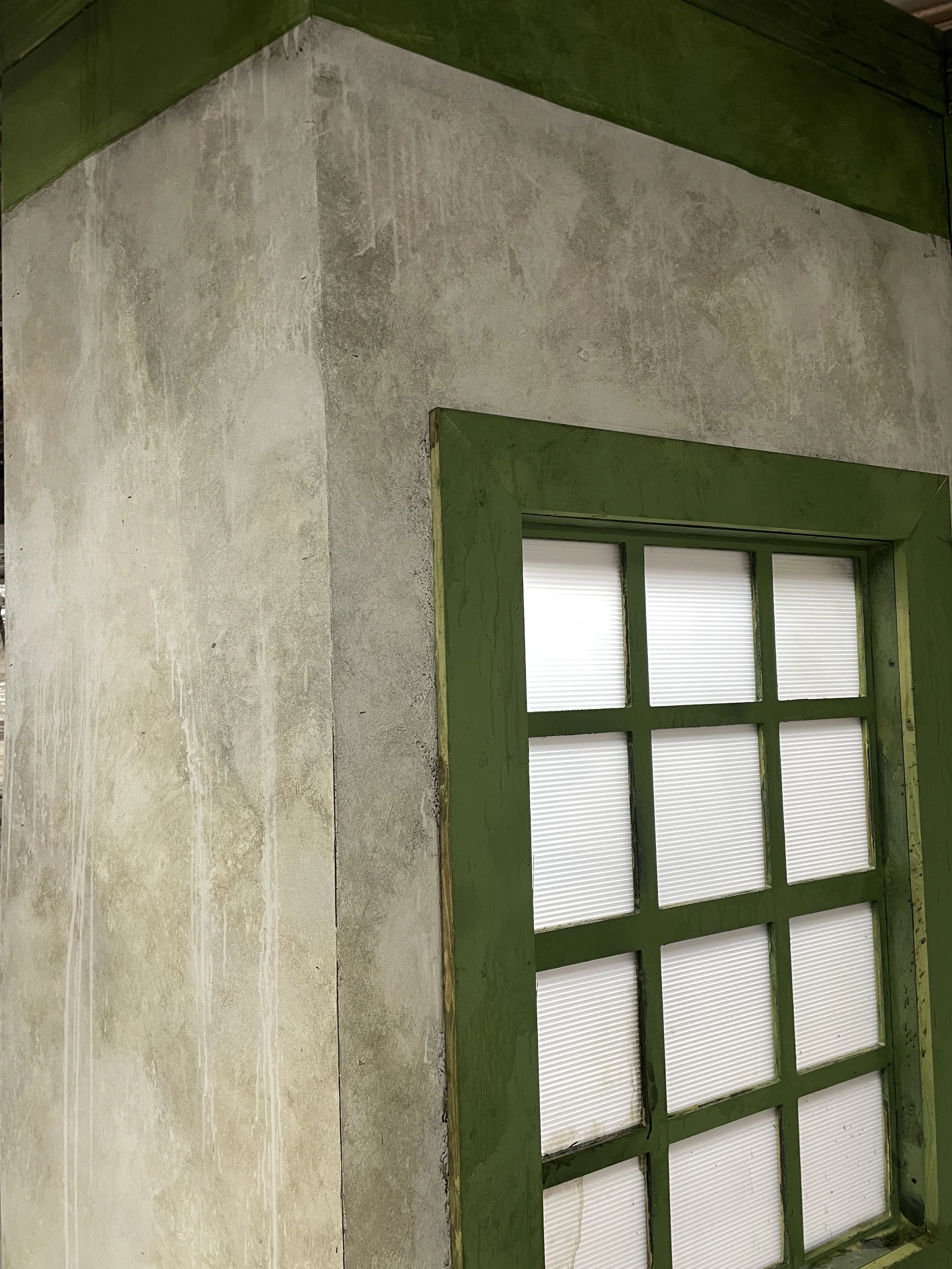
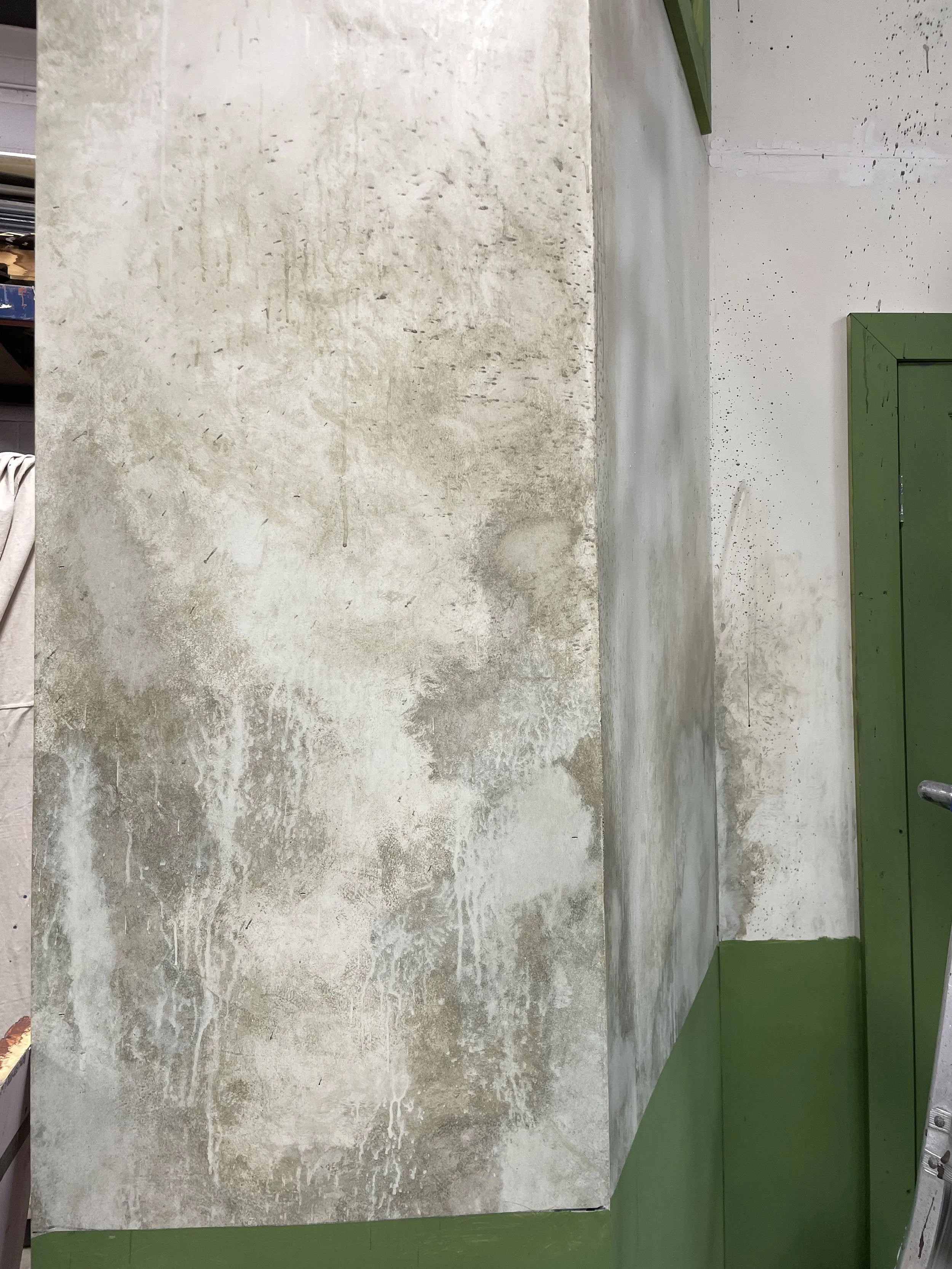
Fibre Reactive Dye doesn’t settle well into a painted surface and it bleeds up through paint that is applied over it: that can be a good thing.
When mixed, the individual colored crystals of dye have different chemical makeups and will separate if they are over worked on a surface. This can make beautiful moldy mildew stains that have dynamic color even if done with one pot of mixed dye.
Spatter and stipple methylcellulose onto a surface to act as a slight resist when applying the dye to a painted surface and over work with a chip brush and rough rag. When dry, this treatment is not easily dry rubbed off, but can be reworked with water.